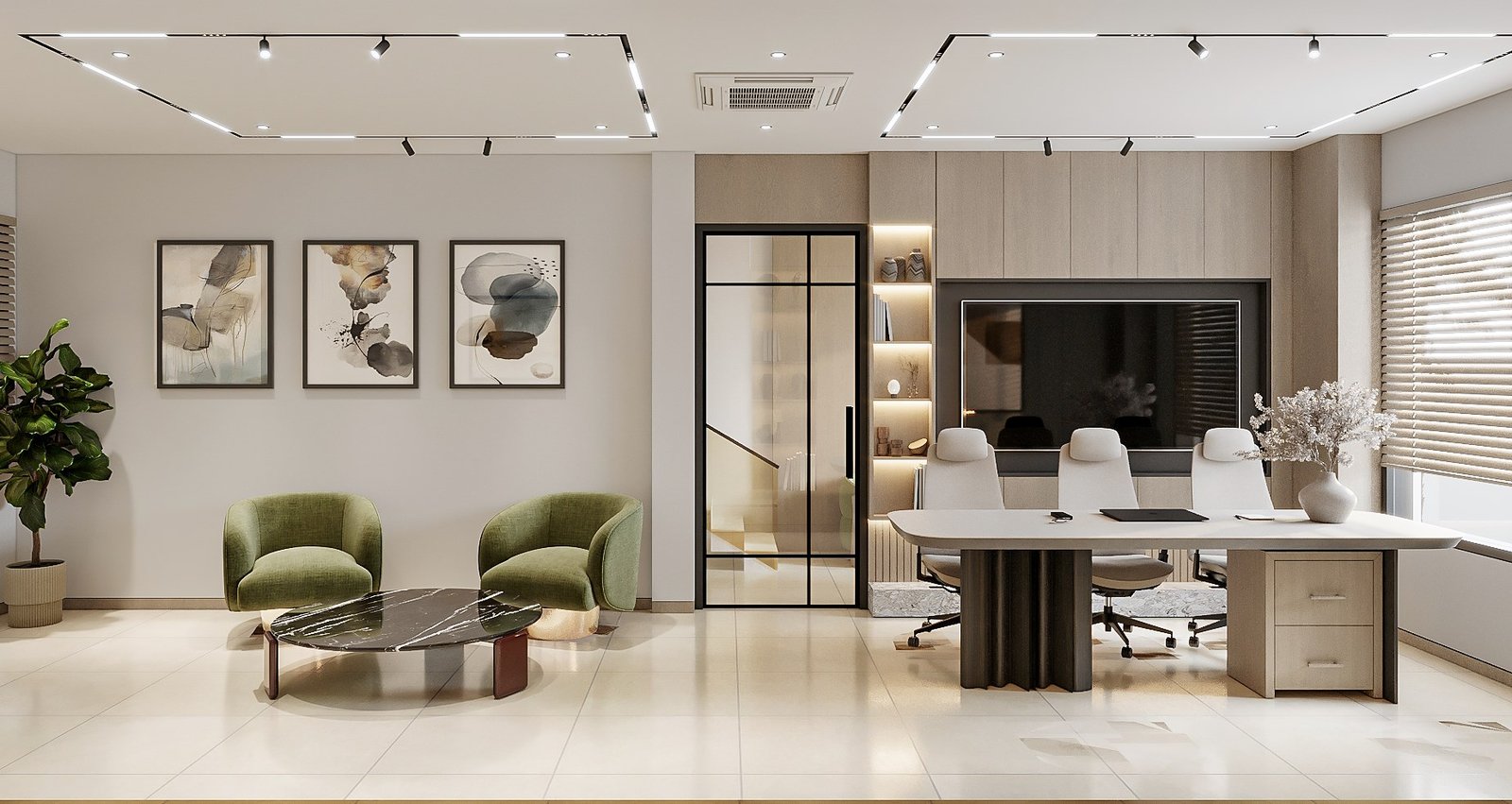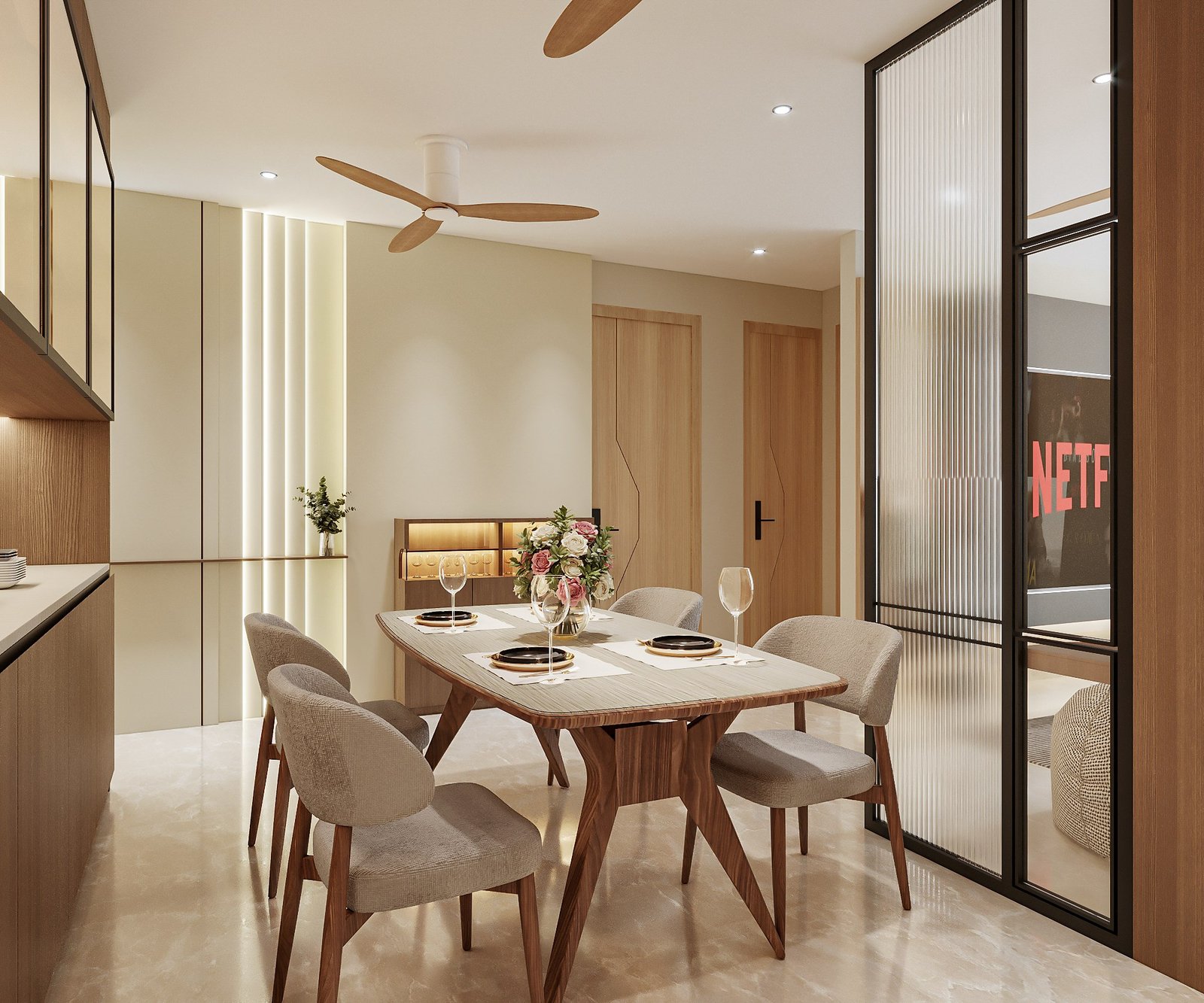
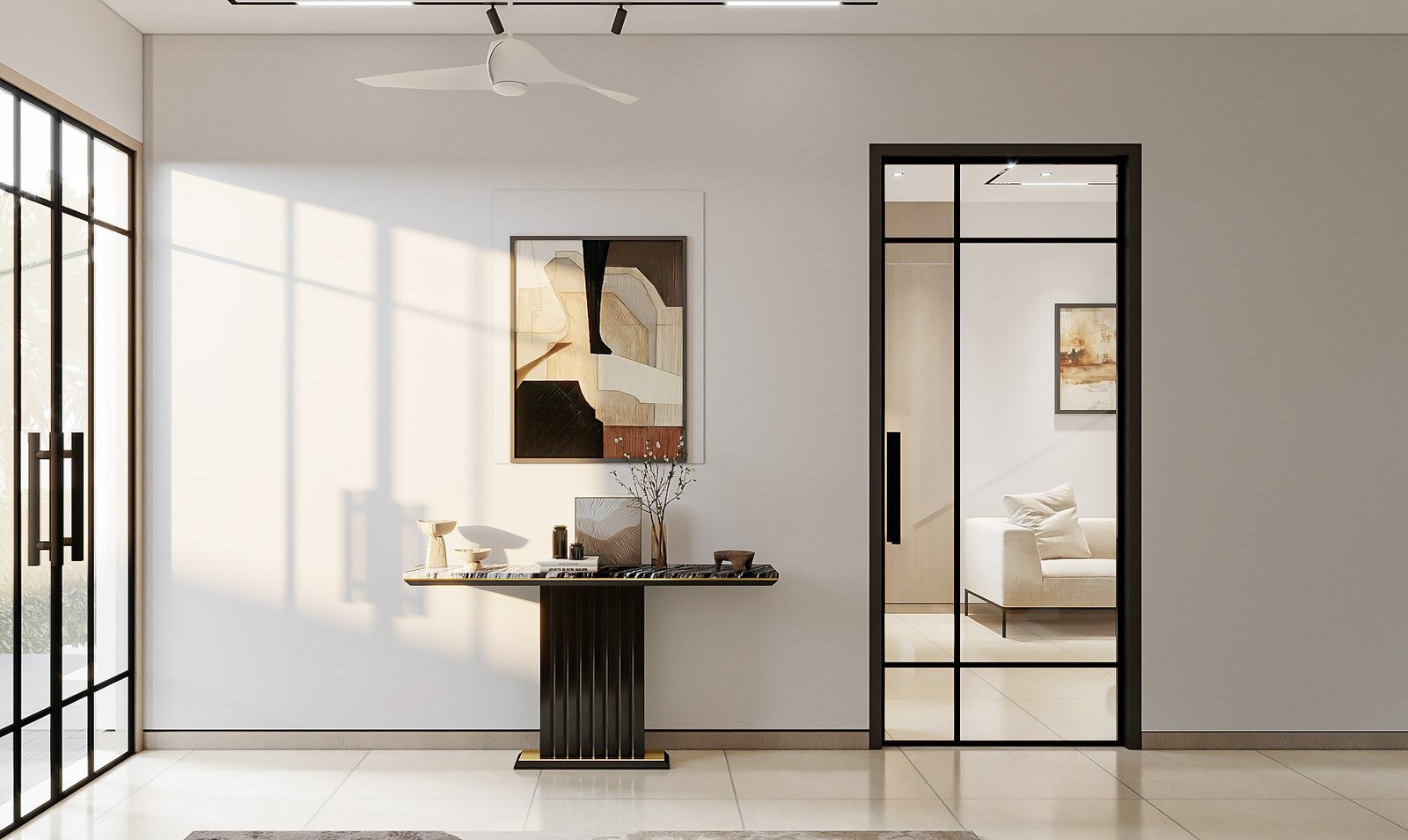
Choose a direction, not a shopping list
Begin with the feeling you want the room to have: warm and grounded, light and quiet, or more expressive. Choose two or three references that share that quality and look for what connects them. It may be a timber tone, a low contrast between large surfaces or a preference for matte finishes. That common thread is more useful than copying every object in the image.
Give the largest surfaces priority
Floors, walls and large cabinetry occupy much of the visual field. Decide how those surfaces relate before choosing smaller accents. When the large elements work together, cushions, lamps and artwork have more flexibility. A small sample can look very different when repeated across a whole wall, so consider its scale as well as its colour.
Use texture to create variety
A room does not need many colours to have depth. A woven fabric, a smooth painted surface and a subtle timber grain can create variation within a narrow palette. Compare texture as carefully as hue. If every surface has a strong pattern, the eye has few places to rest; if all surfaces are equally flat, the room may feel less layered than you intended.
Review samples together in the actual light
Place material samples side by side and look at them at different times of day. A colour that feels warm in a shop may look cooler beside your flooring. Review artificial lighting as well. Where possible, use a larger sample of the most important finishes rather than making the final decision from a small screen image.
Keep maintenance in the conversation
A beautiful finish still has to suit its use. Ask suppliers about care, wear, installation and repair, and compare those requirements with your household. The right material choice balances appearance with the way the space will be used. Record the final selections and references so substitutions can be assessed against the original intention.
SAMPLE EDITORIAL · 4 min read
Discuss your own space ↗